



Blog
Smart Guide to Buy Sapphire in Sri Lanka

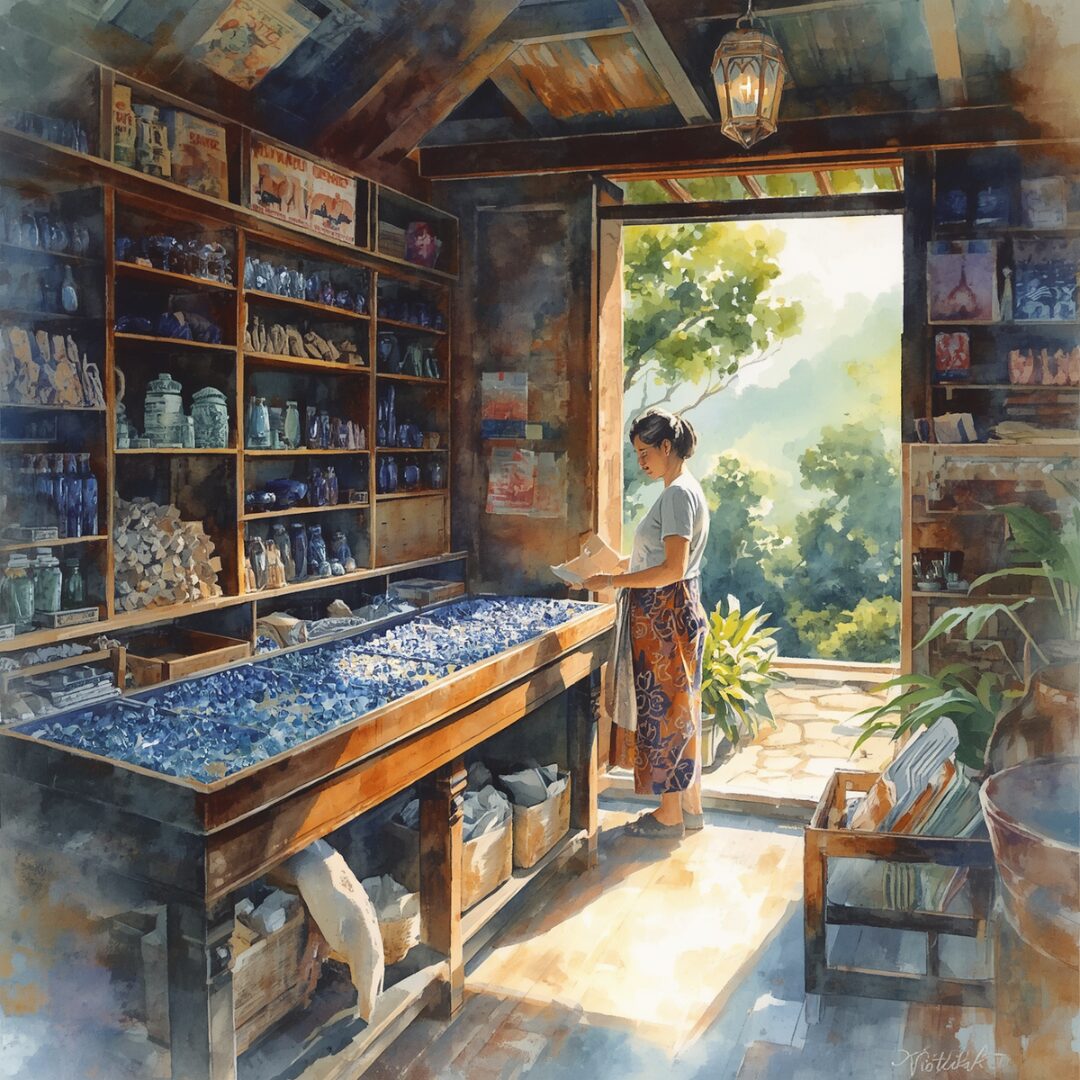
Sri Lanka is one of the world’s best-known sources of natural sapphires. However, choosing a beautiful stone involves more than finding the right shade of blue. People who want to Buy sapphire in Sri Lanka should understand colour, cut, clarity, carat weight, treatments, certification, origin claims, pricing, and seller credentials before making a payment.
Sri Lankan sapphires are often marketed internationally as “Ceylon sapphires,” referring to the country’s former name. They are admired for their wide colour range, attractive brilliance, and long connection to Sri Lanka’s gem industry. Nevertheless, two sapphires of the same weight can differ greatly in appearance, rarity, and value.
From a practical buyer’s perspective, the safest approach is simple: compare several stones, inspect each one under neutral lighting, request written treatment disclosure, confirm the seller’s credentials, and obtain a respected laboratory report for any important purchase.
This guide explains how to make those decisions clearly and confidently.
Featured Answer: How to Buy Sapphire in Sri Lanka
To buy sapphire in Sri Lanka safely, choose a licensed gem dealer, compare colour and cut in neutral lighting, request disclosure of heat or other treatments, and check an independent laboratory report. Confirm the stone’s weight, dimensions, return terms, payment method, and export arrangements before completing the purchase.
Table of Contents
- Why Sri Lanka is famous for sapphires
- What a Ceylon sapphire actually means
- Types of sapphire available in Sri Lanka
- How to judge sapphire quality
- Natural, heated, treated, and laboratory-grown stones
- Why gemstone certification matters
- Where to buy sapphire in Sri Lanka
- Loose sapphire versus sapphire jewellery
- Sapphire price factors
- A step-by-step buying checklist
- Mistakes to avoid
- Buying for engagement rings and daily wear
- Purchasing sapphires online
- Export and administrative considerations
- People Also Ask
- Expert Q&A
- Final buying advice
Why Buyers Choose to Buy Sapphire in Sri Lanka
Sri Lanka has a historic reputation for producing fine sapphires and other coloured gemstones. Ratnapura, whose name is commonly translated as “City of Gems,” is closely associated with mining, trading, cutting, testing, and exporting gemstones.
The country’s gem trade also extends well beyond Ratnapura. Buyers can find established dealers, jewellery businesses, laboratories, and export services in Colombo and other commercial areas.
Sri Lankan sapphire deposits can produce blue sapphires as well as yellow, pink, white, purple, orange, green, and colour-changing varieties. Padparadscha sapphire, known for its pink-orange to orange-pink colour, is one of the most recognised and debated sapphire varieties.
However, origin alone does not guarantee quality. Every mining region produces a broad range of stones, from commercial material to exceptional gems. The Gemological Institute of America notes that individual quality remains critical even when geographic origin contributes to rarity or market interest.
Therefore, buyers should never choose a sapphire only because it is described as Sri Lankan or Ceylon. The stone’s beauty, treatment status, cutting, durability, documentation, and price must still be assessed.
What Does “Ceylon Sapphire” Mean?
A Ceylon sapphire is a sapphire associated with Sri Lankan geographic origin. “Ceylon” was the country’s former English name and remains widely used within the international gemstone trade.
The term is not a formal quality grade. It does not automatically mean that a stone is unheated, vivid blue, flawless, rare, or valuable.
A Ceylon sapphire can be:
- Blue, yellow, pink, white, purple, green, orange, or another sapphire colour
- Heated or unheated
- Light, medium, or dark in tone
- Heavily included or highly transparent
- Poorly cut or exceptionally cut
- Commercial quality or investment-level quality
For this reason, “Ceylon sapphire” should be treated as an origin description rather than a complete statement of value.
A reliable origin claim should normally be supported by a report from a qualified gemmological laboratory. Even laboratories may state an origin opinion only when the gem’s characteristics provide enough evidence for a conclusion.
Types of Sapphire You Can Buy in Sri Lanka
Blue Sapphire
Blue sapphire is the most widely recognised variety. Its colour can range from pale blue to medium blue, vivid royal blue, violetish blue, greenish blue, inky blue, and almost black.
Many buyers prefer a medium to medium-dark stone with strong saturation. However, personal taste matters. A bright cornflower-like blue may appeal to one buyer, while another may prefer a deeper royal blue.
Colour descriptions such as “royal blue” and “cornflower blue” are used frequently in the trade. Still, buyers should not rely on those descriptions alone. Different sellers and laboratories may apply colour terminology differently.
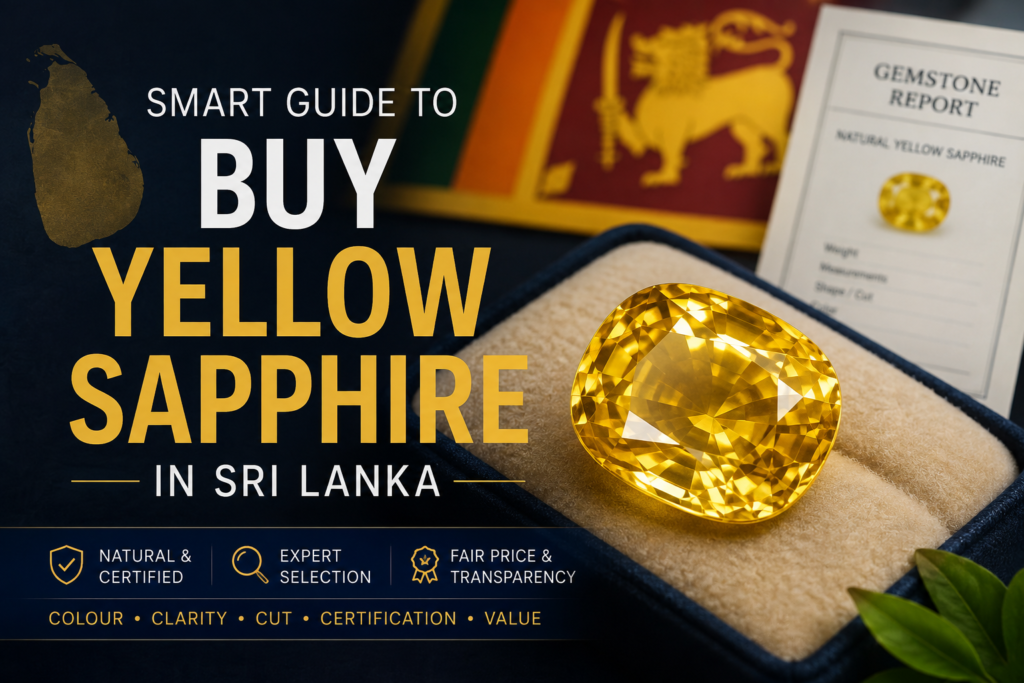
Yellow Sapphire
Yellow sapphire ranges from light lemon yellow to intense golden yellow. It is popular in rings, pendants, earrings, and traditional purchases.
Colour uniformity is important. In addition, the stone should not appear overly brown, grey, or uneven unless that appearance is intentionally desired.
Some yellow sapphires are heated or diffusion-treated to improve colour. Therefore, treatment information should be confirmed in writing.
Pink Sapphire
Pink sapphire can range from delicate pastel pink to strongly saturated vivid pink. As the red component becomes dominant, the boundary between pink sapphire and ruby may become a matter of laboratory classification and trade convention.
A high-quality pink sapphire should display attractive colour, good brilliance, and a pleasing balance between tone and saturation.
Padparadscha Sapphire
Padparadscha is associated with a delicate mixture of pink and orange. The term has generated debate because colour boundaries are narrow and market descriptions are sometimes applied too broadly.
A seller’s label alone is not enough for a valuable padparadscha purchase. The buyer should request an independent report that specifically supports the padparadscha description.
GIA explains that it indicates on eligible coloured-stone reports when a sapphire meets its criteria for the padparadscha description.
White Sapphire
White sapphire is colourless or nearly colourless corundum. It can be used as a centre stone or as an accent stone.
Although white sapphire is durable, its optical appearance is different from diamond. It generally displays less fire and may require regular cleaning to maintain a bright appearance.
Star Sapphire
A star sapphire displays a star-like optical effect called asterism. The effect is normally caused by light reflecting from aligned needle-like inclusions.
A good star should be centred, distinct, and visible as the light moves across the stone. Star sapphires are generally cut as cabochons rather than faceted gems.
How to Evaluate a Sapphire Before Buying
Unlike diamonds, coloured gemstones are not valued through one universally applied grading formula. Nevertheless, the familiar factors of colour, clarity, cut, and carat weight remain useful.
For sapphires, colour is usually the most influential quality factor.
1. Evaluate the Colour First
Sapphire colour can be assessed through three connected characteristics:
- Hue: The basic colour, such as blue, violetish blue, or greenish blue
- Tone: How light or dark the stone appears
- Saturation: The strength or intensity of the colour
A stone can have strong blue saturation but still appear too dark. Conversely, a pale stone may be bright but lack colour intensity.
GIA identifies colour as the most important sapphire quality factor and notes that highly valued blue sapphires commonly show strong to vivid saturation with medium to medium-dark tone.
However, buyers should choose a colour they genuinely enjoy. Market preference is useful, but personal preference determines whether the stone remains satisfying over time.
Inspect Colour Under Different Lighting
Whenever possible, view the sapphire under:
- Natural daylight
- Neutral white indoor lighting
- Warm indoor lighting
- Diffused lighting without strong reflections
Some sapphires look lively under jewellery-store spotlights but become overly dark in ordinary environments.
In practical buying situations, one of the most useful tests is to move the stone away from the display counter. View it near a window, then shade it with your hand. A well-chosen sapphire should remain attractive in more than one lighting condition.
2. Examine the Cut
Cut affects brilliance, colour distribution, face-up size, and symmetry.
A well-cut sapphire should return light across most of its visible surface. A poorly cut stone may show a dark central area, uneven brilliance, excessive depth, or a transparent “window” through its centre.
Common sapphire shapes include:
- Oval
- Cushion
- Round
- Emerald cut
- Pear
- Radiant
- Marquise
- Cabochon
Sri Lankan sapphires are often cut to preserve colour and weight from the original rough. As a result, some stones may be deeper than standardised diamond proportions.
Depth is not automatically a defect. However, excessive depth may make a sapphire appear smaller from the top than another stone of the same carat weight.
GIA advises buyers not to compromise on cut because cutting quality can make a major difference to brilliance, beauty, and marketability.
3. Review Clarity and Inclusions
Natural sapphires often contain internal characteristics known as inclusions. These can include mineral crystals, healed fissures, colour zoning, fingerprints, needles, and growth structures.
An inclusion does not automatically make a sapphire undesirable. In fact, certain internal features can help gemmologists identify natural formation or support an origin opinion.
However, buyers should consider:
- Whether inclusions are visible without magnification
- Whether they reduce transparency
- Whether they create a cloudy appearance
- Whether they reach the surface
- Whether fractures could affect durability
- Whether an inclusion sits directly beneath the centre of the stone
An “eye-clean” sapphire normally means that distracting inclusions are not easily visible to the unaided eye under ordinary viewing conditions. The term is subjective, so buyers should inspect the actual gem rather than depending only on the label.
4. Compare Carat Weight and Dimensions
Carat measures weight, not visible size. One carat equals 0.2 grams.
Two sapphires with the same carat weight can have different face-up dimensions. A deep stone may carry much of its weight beneath the setting, while a shallower stone may look larger from the top.
Always request:
- Exact carat weight
- Length
- Width
- Depth
- Shape
- Cutting style
These details are especially important when buying a centre stone for an existing jewellery design.
5. Check Colour Zoning
Colour zoning means that colour is distributed unevenly within the sapphire. It may appear as bands, patches, or areas of different intensity.
Some zoning is common and may be difficult to notice when the gem is viewed face-up. Strong zoning, however, can reduce the stone’s visual appeal.
Rotate the sapphire slowly and view it from several directions. Also compare photographs with the physical stone because camera angles can conceal uneven colour.
Sapphire Quality Comparison Table
| Quality factor | More desirable characteristics | Possible concerns | What the buyer should do |
|---|---|---|---|
| Colour | Attractive hue, balanced tone, strong saturation | Excessively dark, grey, brown, weak or uneven colour | Compare several stones under neutral lighting |
| Cut | Good symmetry, lively brilliance, limited windowing | Large window, dark extinction, uneven outline | View the gem face-up and while rotating it |
| Clarity | Transparent and eye-clean or inclusions that do not distract | Cloudiness, major surface-reaching fractures | Inspect with the unaided eye and magnification |
| Carat and dimensions | Suitable visible size and balanced proportions | Hidden weight caused by excessive depth | Compare millimetre dimensions, not weight alone |
| Treatment | Clearly disclosed and appropriately priced | Missing, vague, or conflicting disclosure | Obtain written disclosure and a laboratory report |
| Origin | Supported by an independent laboratory opinion | Unsupported “Ceylon” marketing claim | Verify the report and its report number |
| Documentation | Detailed invoice, report, return terms, seller identity | Cash-only sale with no meaningful records | Do not proceed without complete documentation |
Natural, Heated, Treated, and Laboratory-Grown Sapphire
Treatment status can materially affect rarity and price. Therefore, it must be understood before you Buy sapphire in Sri Lanka.
Natural Sapphire
A natural sapphire formed through geological processes rather than being manufactured in a laboratory.
However, “natural” does not necessarily mean untreated. A natural sapphire may have undergone heat treatment or another enhancement.
Heated Sapphire
Heating is widely used to improve sapphire colour, clarity, or both. Heat-treated sapphires can be attractive, durable, and suitable for fine jewellery.
The important issue is disclosure. A heated sapphire should be described and priced as heated.
For fine stones, confirmation that there is no evidence of heating may increase rarity and value. However, unheated status does not automatically make an unattractive sapphire better than a beautiful heated one.
Unheated Sapphire
An unheated sapphire is a natural sapphire for which a qualified laboratory has found no evidence of heat treatment.
Unheated stones with excellent colour, transparency, cut, and size may command strong premiums because suitable material is comparatively scarce.
Still, buyers should avoid paying merely for the word “unheated.” The gem must also be visually appealing.
Diffusion-Treated Sapphire
Diffusion treatment uses heat and introduced elements to modify colour. Treatment penetration can vary depending on the process.
Diffusion-treated sapphires are generally valued below comparable heated-only or untreated stones. GIA advises buyers to ask about treatment because diffusion can produce vivid colour while significantly affecting value.
Fracture-Filled or Cavity-Filled Sapphire
Some stones may contain substances introduced into fractures or cavities to improve appearance. These treatments can affect value, durability, cleaning methods, and repair procedures.
They should be clearly disclosed.
Laboratory-Grown Sapphire
Laboratory-grown sapphire has essentially the same basic chemical composition and crystal structure as natural sapphire, but it is produced through an artificial growth process.
It can be attractive and durable, yet it is normally much less expensive than a comparable natural stone.
A reputable invoice and laboratory report should clearly distinguish between natural and laboratory-grown material.
Treatment Comparison
| Sapphire category | What it means | Typical market position | Main buying concern |
| Natural, no evidence of heat | Natural stone with no detectable heat treatment | Often carries a premium when quality is high | Must be supported by a credible report |
| Natural, heated | Natural stone improved through heating | Common and accepted when disclosed | Price should reflect treatment |
| Diffusion-treated | Colour altered through heat and introduced elements | Usually lower value than heated-only material | Treatment depth and disclosure |
| Filled sapphire | Fractures or cavities contain foreign material | Usually lower commercial value | Durability, cleaning, repair, disclosure |
| Laboratory-grown | Created through a manufacturing process | Affordable alternative | Must not be represented as natural |
| Imitation | Different material made to resemble sapphire | Decorative rather than natural-sapphire value | Correct material identification |
Why Certification Matters When You Buy Sapphire in Sri Lanka
A laboratory report is one of the most valuable protections available to a sapphire buyer.
Depending on the laboratory and report type, it may state:
- Whether the material is natural or laboratory-grown
- The gemstone species and variety
- Weight and measurements
- Shape and cutting style
- Basic colour description
- Detectable treatments
- Whether there is evidence of heating
- An opinion on geographic origin, when possible
- Whether a stone qualifies for a special description such as padparadscha
A report is not the same as an appraisal. It may not tell you what the gem should cost.
Similarly, a report does not guarantee that a sapphire is beautiful. It provides identification and treatment information that helps the buyer compare the seller’s claims with independent findings.
Verify the Report
Before paying:
- Match the carat weight with the stone.
- Match the measurements and shape.
- Check the report date.
- Check the laboratory name.
- Use the laboratory’s verification system when available.
- Look for alterations or inconsistent details.
- Confirm that the report number on the document matches the seller’s records.
The National Gem and Jewellery Authority provides gem-testing and certification facilities, including services connected with Sri Lanka’s gem-trading infrastructure. Its Demuwawatha International Gem Trading Centre information describes testing and certification facilities intended to help verify gemstone authenticity and characteristics.
Buyers seeking a general international explanation of reports, treatments, colour, and cut can also consult the GIA sapphire buyer’s guide.
Where to Buy Sapphire in Sri Lanka
Licensed Gem Dealers
A licensed dealer offers a more accountable buying route than an undocumented private transaction.
Sri Lanka’s National Gem and Jewellery Authority maintains licensing procedures for gem dealers. Its published process covers personal traders, businesses, partnerships, and companies, with identity, business-registration, and taxpayer documentation among the administrative requirements.
You can review the official NGJA gem dealer licence information before purchasing.
A licence does not remove the need to inspect the stone. However, it gives the buyer an important credential to verify.
Established Jewellery Stores
Jewellery stores may be suitable for buyers who want a completed ring, pendant, bracelet, or pair of earrings.
Ask the store to separate the following costs:
- Sapphire
- Accent stones
- Gold or platinum
- Manufacturing
- Design work
- Certification
- Taxes or other charges
- Delivery or export administration
This makes comparisons easier and reduces confusion about the gemstone’s actual value.
Colombo Gem and Jewellery Businesses
Colombo is convenient for local and international buyers because it contains established dealers, jewellery businesses, laboratories, and export-related services.
However, compare several options rather than purchasing from the first store visited.
Ratnapura Gem Market
Ratnapura offers direct exposure to Sri Lanka’s gem trade. Nevertheless, the market can be difficult for inexperienced buyers because transactions may move quickly and terminology may be highly specialised.
A first-time buyer should consider working with an independent gemmologist or an established licensed business rather than relying on informal assurances.
The NGJA describes the Demuwawatha International Gem Trading Centre in Ratnapura as a government-vested trading hub with gem testing, certification, customs, courier, insurance, and export-related facilities.
Online Sri Lankan Gemstone Stores
Online buying gives customers more time to compare specifications. Still, photographs and videos can be affected by:
- Strong spotlights
- White-balance adjustments
- Image saturation
- Background colour
- Reflections
- Magnification
- Screen settings
Ask for videos in daylight or neutral lighting and request a written description of colour, inclusions, treatment, and return conditions.
Loose Sapphire or Finished Jewellery?
A loose sapphire gives the buyer more control over the centre stone. It is easier to inspect, weigh, measure, photograph, and compare before it is covered by a setting.
Finished jewellery, however, is convenient and allows the buyer to judge the complete design immediately.
| Buying format | Advantages | Limitations | Best suited to |
| Loose sapphire | Easier inspection, more design control, clearer stone comparison | Requires separate jewellery design and setting | Custom rings and collectors |
| Finished jewellery | Ready to wear, complete design visible, simpler transaction | Setting may conceal areas of the gem | Gifts and convenience-focused buyers |
| Custom jewellery | Personalised design and selected gemstone | Requires planning, measurements, and production time | Engagement rings and heirlooms |
| Matching sapphire pair | Suitable for earrings or balanced designs | Well-matched pairs can cost more | Earrings and symmetrical jewellery |
When buying a loose stone for a ring, ask the jeweller to inspect it before final setting. The setting should protect vulnerable corners and avoid unnecessary pressure on inclusions or surface-reaching fractures.
How Sapphire Prices Are Determined
There is no single fixed price per carat for all Sri Lankan sapphires.
Price is influenced by:
- Colour attractiveness
- Tone and saturation
- Transparency
- Clarity
- Cut quality
- Carat weight
- Face-up dimensions
- Treatment status
- Geographic origin
- Laboratory documentation
- Rarity of the colour
- Supply and market demand
- Seller reputation
- Matching requirements for pairs or sets
Price per carat may increase as quality and size increase. However, the relationship is not linear.
For example, a fine three-carat sapphire may cost far more than three similar one-carat stones because larger gems with desirable quality are less common.
Why Cheap Sapphires Are Not Always Good Value
A low price may reflect:
- Very dark colour
- Weak saturation
- Heavy inclusions
- Poor cutting
- Diffusion treatment
- Filling
- Laboratory-grown origin
- Unsupported origin claims
- Lack of certification
- Difficult return terms
A reasonably priced heated sapphire with excellent colour and cutting may be a better purchase than a more expensive unheated sapphire with poor appearance.
Numbered Checklist to Buy Sapphire in Sri Lanka
Use this checklist before completing a purchase:
- Set a complete budget.
Include the gemstone, laboratory report, jewellery setting, taxes, delivery, insurance, resizing, and future maintenance. - Choose the sapphire type.
Decide whether you want blue, yellow, pink, white, padparadscha, star, or another variety. - Choose loose or set jewellery.
A loose stone is easier to inspect, while finished jewellery offers convenience. - Verify the seller.
Request the business name, physical address, contact details, licence information, and written sales terms. - Compare at least three stones.
Side-by-side comparison makes differences in colour, cut, and brightness easier to see. - Inspect under neutral light.
Do not rely only on spotlights or edited images. - Request treatment disclosure.
Ask whether the stone is heated, unheated, diffusion-treated, filled, coated, laboratory-grown, or otherwise enhanced. - Check the laboratory report.
Match the report’s weight, dimensions, shape, treatment findings, and report number with the stone. - Examine inclusions and durability.
Pay close attention to fractures near corners, edges, or areas where setting pressure will be applied. - Compare dimensions as well as carat weight.
A deep sapphire may appear smaller than a better-proportioned stone of equal weight. - Obtain a detailed invoice.
The invoice should identify the gemstone, weight, colour, treatment, certificate number, metal, accent stones, and total price. - Read the return policy.
Confirm the inspection period, refund rules, resizing conditions, and who pays for return shipping. - Confirm payment security.
Avoid sending funds to an unrelated personal account without complete documentation. - Arrange insured delivery.
High-value jewellery and loose gemstones should be packed, tracked, and insured appropriately. - Keep permanent records.
Store the invoice, report, photographs, correspondence, valuation documents, and service history securely.
Common Mistakes to Avoid
Buying Only by Carat Weight
A heavier sapphire is not automatically better. Colour, cut, clarity, treatment, and visible dimensions may matter more.
Trusting Colour Names Without Comparing the Stone
Labels such as royal blue, vivid blue, and cornflower blue can be useful descriptions. However, they should not replace visual assessment.
Assuming Every Sri Lankan Sapphire Is Unheated
Many natural sapphires in the market have been heated. A Sri Lankan origin claim does not establish treatment status.
Treating a Seller’s Certificate as Independent Evidence
A seller-created card may contain useful information, but it is not the same as an independent gemmological report.
Ignoring Cut Quality
An attractive rough sapphire can lose visual quality through poor cutting. Large windows, dark areas, asymmetry, and excess depth can reduce beauty.
Paying an Unheated Premium Without Laboratory Support
“No heat” is a technical finding. For a significant purchase, it should be supported by an appropriate laboratory report.
Purchasing Through Photographs Alone
Photographs can exaggerate saturation and conceal inclusions. Request multiple videos, neutral lighting, dimensions, and a return period.
Believing a Gemstone Is a Guaranteed Investment
Fine gemstones can preserve or increase value in certain circumstances, but future resale prices are not guaranteed. Dealer margins, buyer preferences, liquidity, documentation, and market conditions all influence resale outcomes.
Buy for quality and enjoyment first. Treat any investment expectation cautiously.
Buying Sapphire for an Engagement Ring
Sapphire is well suited to engagement rings because corundum ranks 9 on the Mohs hardness scale and has good toughness. Nevertheless, hardness refers mainly to resistance to scratching; it does not make a gemstone impossible to chip or damage.
For an engagement ring, consider:
- A secure prong or bezel setting
- Protection for pointed corners
- A comfortable ring profile
- Adequate light entry
- A design that permits cleaning
- An eye-clean centre stone
- A balanced depth
- A colour that remains attractive indoors
- Written treatment disclosure
- Future resizing requirements
Daily-wear rings collect soap, skin oils, lotion, and dust beneath the stone. Therefore, a sapphire that looks slightly dark when clean may look even darker when dirty.
Choose a stone with enough brightness for normal daily conditions.
How to Buy Sapphire in Sri Lanka Online
Online purchasing can be convenient when the seller provides complete information.
A useful online listing should show:
- Exact carat weight
- Measurements
- Shape and cut
- Natural or laboratory-grown status
- Treatment disclosure
- Origin claim
- Laboratory name
- Certificate number
- Clear photographs
- Videos in more than one light
- Price
- Availability
- Return conditions
- Shipping and insurance terms
Before ordering, request confirmation that the sapphire shown is the exact sapphire you will receive.
For a curated selection of natural stones and gemstone jewellery, buyers can explore certified Ceylon sapphires and custom jewellery from Prestige Gems.
Administrative and Export Considerations
International visitors who buy gemstones in Sri Lanka should confirm how the item will be exported, declared, insured, and delivered.
The NGJA publishes procedures for gem and jewellery exports. These procedures address matters such as exporter licensing, invoices, inspection, insurance, export service fees, customs-related handling, and authorised export centres.
The official NGJA gem and jewellery export procedure provides current administrative information for businesses and exporters.
A retail customer may not personally complete every export step because a licensed seller or exporter may manage the process. Even so, the customer should request:
- A commercial invoice
- A laboratory report
- Export documentation where applicable
- Insurance confirmation
- Courier tracking
- Recipient and address confirmation
- A written description of duties or taxes not included in the sale
These are administrative considerations rather than legal or tax advice. Requirements may depend on the item, transaction structure, destination country, value, and current regulations. Buyers should obtain guidance from the relevant authorities or a qualified licensed service provider when necessary.
Caring for a Sapphire
Warm water, mild soap, and a soft brush are generally suitable for many untreated and heat-treated sapphires.
However, cleaning requirements can change when a gemstone is filled, dyed, coated, heavily fractured, or combined with delicate materials.
Follow these precautions:
- Ask whether the sapphire has received any treatment that affects cleaning.
- Avoid sudden temperature changes.
- Remove jewellery before heavy physical work.
- Store it separately from softer gemstones.
- Inspect prongs and settings regularly.
- Do not use ultrasonic or steam cleaning without confirming suitability.
- Have valuable jewellery checked by a qualified jeweller.
GIA notes that warm soapy water is a safe general method, while filled or dyed material may require gentler care.
People Also Ask About Buying Sapphire in Sri Lanka
Is it cheaper to buy sapphire in Sri Lanka?
It can be cost-effective because Sri Lanka has an established mining, cutting, trading, jewellery, testing, and export industry. However, price depends on quality, treatment, certification, seller costs, and market demand, so a Sri Lankan purchase is not automatically cheaper.
How do I know whether a Ceylon sapphire is real?
Request an independent gemmological report that identifies the stone as natural sapphire and states detectable treatments. For an important origin claim, choose a report that also gives a Sri Lankan geographic-origin opinion when the laboratory can determine one.
Are heated Sri Lankan sapphires valuable?
Yes. Heated natural sapphires can be beautiful and valuable when the treatment is properly disclosed. Comparable unheated stones may command a premium, but colour, cut, clarity, size, and overall beauty remain essential.
What colour of Sri Lankan sapphire is best?
There is no single best colour for every buyer. Strong, vivid blue with a balanced medium to medium-dark tone is widely sought after, but pink, yellow, padparadscha, white, and other colours can also be desirable.
Should I buy a loose sapphire or a finished ring?
Choose a loose stone when you want greater control over gemstone quality and design. Choose a finished ring when convenience and the complete visual result are more important.
Expert Q&A About Buying Sapphire in Sri Lanka
1. Does a gemstone report state the sapphire’s financial value?
Usually, an identification report does not provide a retail value. It identifies the gemstone and may describe treatments and geographic origin, while a separate valuation or appraisal estimates replacement or market value.
2. Why can two certified sapphires with the same weight have different prices?
Certification confirms characteristics but does not make stones visually identical. Differences in colour saturation, tone, cut, clarity, dimensions, treatment, origin confidence, and rarity can create substantial price differences.
3. Can a laboratory guarantee that a sapphire came from a specific mine?
Laboratories generally provide geographic-origin opinions based on gemmological and analytical evidence. Identifying one exact mine is often more difficult, so buyers should be cautious about highly specific mining claims unless they are supported by strong documentation.
4. What should be written on a sapphire invoice?
The invoice should include the seller’s identity, date, price, gemstone type, natural or laboratory-grown status, carat weight, measurements, colour description, treatment disclosure, certificate number, metal details, accent stones, and return or warranty terms.
5. Is a larger sapphire always a better long-term purchase?
No. A smaller sapphire with exceptional colour, cutting, transparency, and reliable documentation may be more desirable than a larger stone with poor colour or significant treatment. Quality and market appeal should be considered alongside size.
Conclusion: Buy Sapphire in Sri Lanka with Confidence
Sri Lanka offers access to one of the world’s most diverse and respected sapphire traditions. Buyers can find blue, yellow, pink, white, star, and padparadscha sapphires in loose stones and finely made jewellery.
However, a trustworthy purchase depends on evidence rather than sales language.
Start by selecting a licensed and established seller. Next, compare colour and cut under realistic lighting. Ask for written disclosure of all treatments. Then, confirm the gem’s identity through an independent laboratory report and obtain a detailed invoice.
Most importantly, choose a sapphire that remains beautiful to you beyond the showroom spotlight. A well-selected stone should combine attractive colour, balanced cutting, suitable durability, transparent documentation, and a price that reflects its actual characteristics.
By following a structured buying process, you can choose a natural Sri Lankan sapphire for an engagement ring, gift, personal collection, or heirloom with greater clarity and confidence.
 Blue Sapphire
 Pink Sapphire
 Yellow Sapphire
 Padparadscha Sapphire
 White Sapphire
 More
More Amethyst
 Peridot
 Moonstone
 Garnet
 Aquamarine
 Spinel
 Ladies Rings
 Pendants
 Earrings
 Gent’s rings